

The week’s strongest signals came from execution layers rather than broad promises: control of enterprise AI agents, local electronics manufacturing in the United States, a minimally invasive medical-device programme, and a visible Israel–Morocco business channel. Bitcoin funds supplied a fifth signal through measured capital flows. The stages matter: one financing closed, one acquisition was signed but still needs approval, one device remains investigational, and an exhibition presence is not a new treaty.

Rein Security raises $25 million for AI-agent runtime controls
Tel Aviv and New York company Rein Security announced a $25 million Series A on 8 October. Glilot Capital and Sienna Venture Capital co-led the round; Corner Ventures, Atlacle and RNP Capital Advisors participated. Rein says the financing brings its total funding to $35 million and will support product work, agent-security research and global hiring. The two public rounds reviewed for this report—an $8 million seed and the new $25 million Series A—sum to $33 million, so the company’s release does not explain the remaining $2 million in its cumulative figure.
The product thesis is more useful than the headline number. Rein places controls at runtime, where an enterprise agent calls APIs, reaches business systems and takes actions. The company describes action-level visibility, policy enforcement and audit trails rather than a prompt-only filter. Revenue-growth and deployment figures in the announcement remain company claims; no valuation or investor check sizes were disclosed.
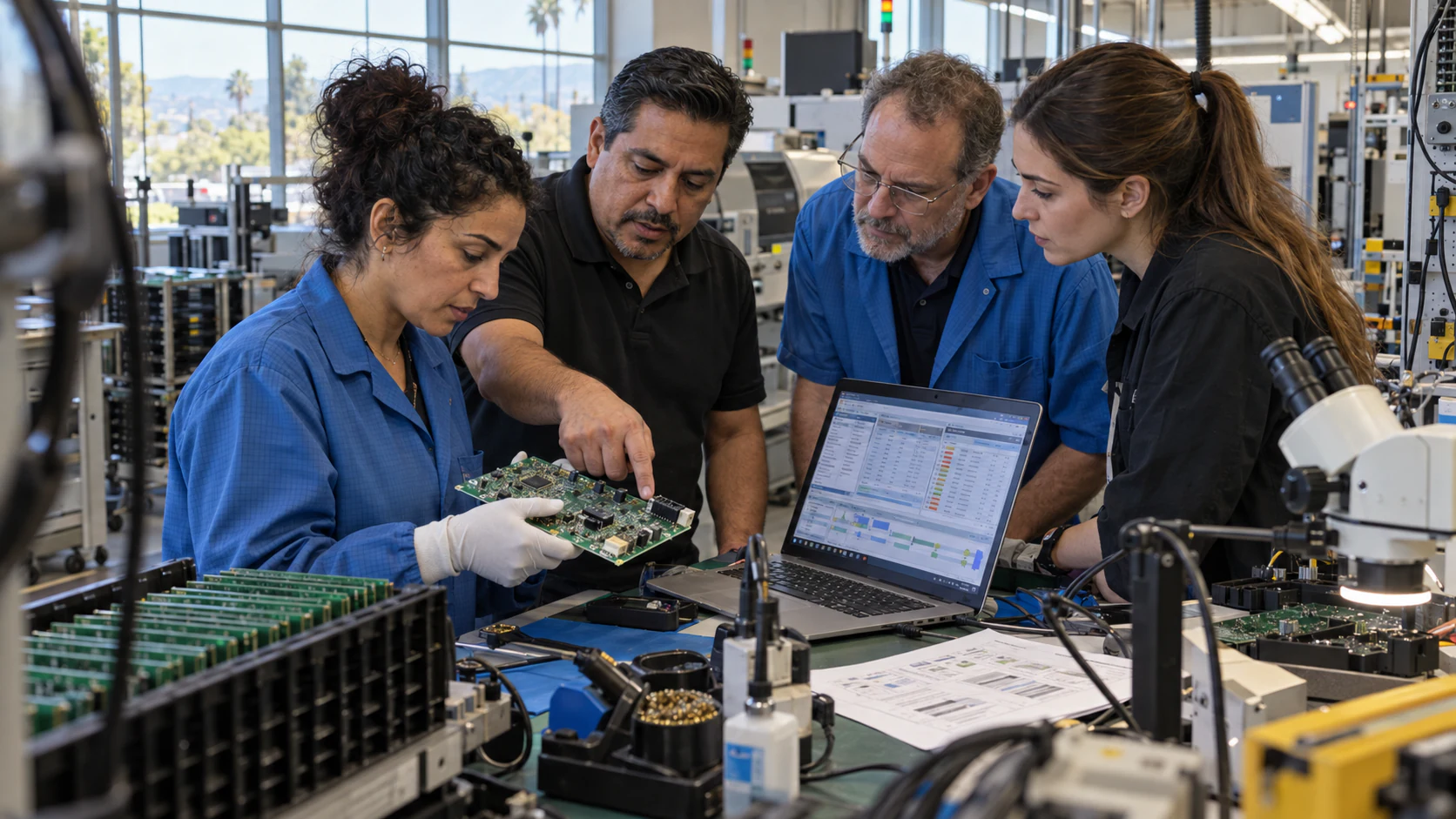
PCB Technologies signs a $120 million US manufacturing deal
Israel’s PCB Technologies signed a definitive agreement to acquire all shares of San Jose-based Gorilla Circuits at a stated enterprise value of $120 million, subject to customary purchase-price adjustments. Gorilla provides printed-circuit-board fabrication and electronic card assembly for high-mix, lower-volume programmes.
For PCB Technologies, the practical asset is a US production base close to semiconductor, technology, aerospace and defence customers. The buyer says it plans to combine Gorilla’s manufacturing and customer access with PCB Technologies’ substrates, microelectronics and advanced packaging capabilities. The transaction has not closed: it still requires customary conditions, including approval by the Committee on Foreign Investment in the United States. PCB Technologies expects completion within eight months, but that is a forecast, not a completed timetable.
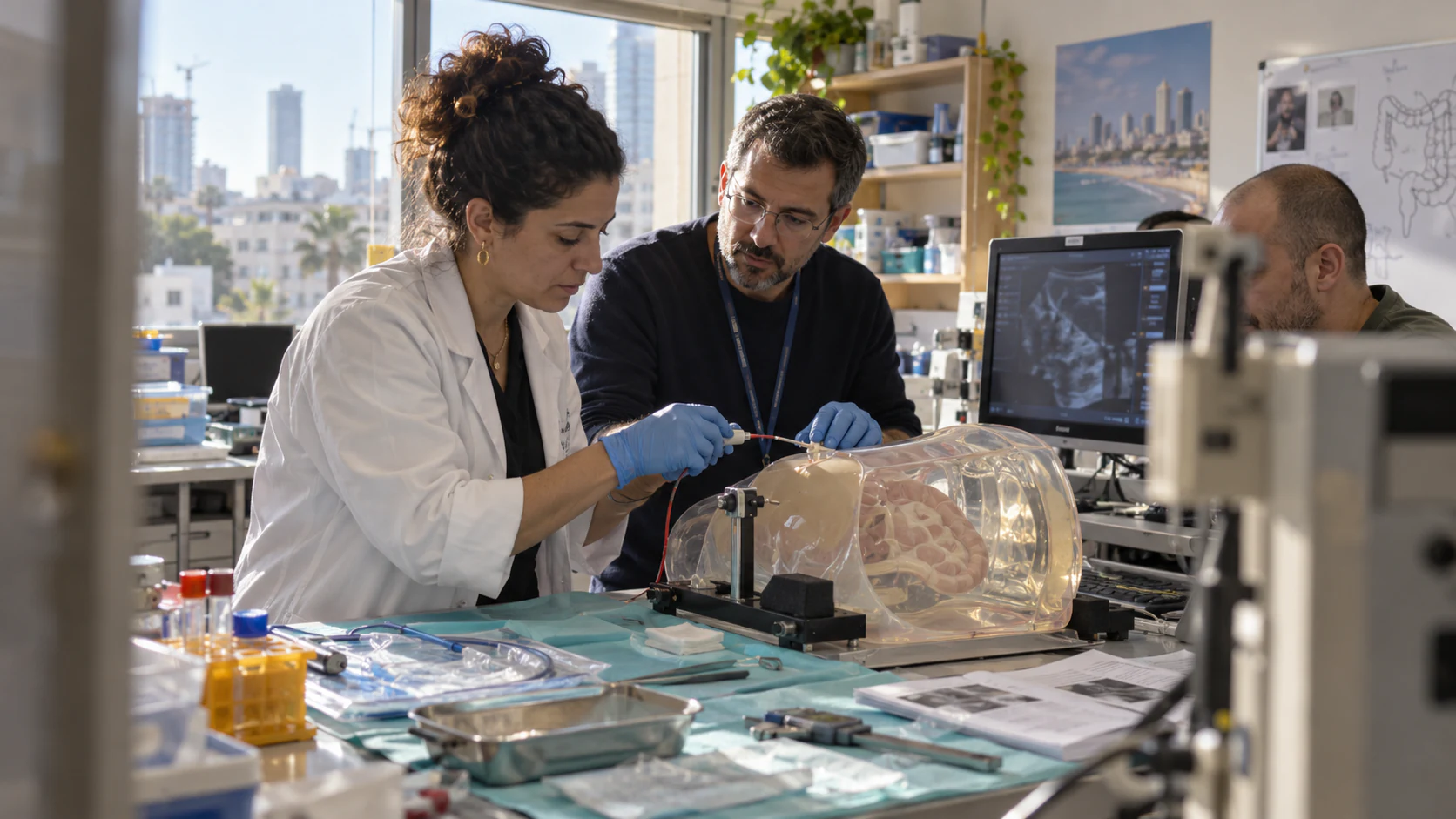
Phantom GI adds a $5 million medical-device seed round
Phantom GI raised a $5 million seed round led by Pitango HealthTech, with RAD Biomed and RUNI Ventures participating. The Tel Aviv startup is developing PercStoma, an investigational device intended to create an ostomy through a percutaneous approach rather than conventional surgery.
The company describes a single-access process using fixation and a proprietary stent. Independent coverage says the capital will support development and clinical work. The important limit is clinical status: the device remains under investigation and has not been reported as regulatory approved. The financing therefore supports a development programme; it does not establish safety, efficacy or commercial availability.

Marrakech turns an existing accord into a working industry channel
Israel opened its first national pavilion at the Marrakech Airshow, held from 7 to 10 October. The delegation included eight defence companies, while Israel Aerospace Industries separately confirmed that it was exhibiting aerospace, communications and unmanned-system capabilities.
This is a concrete commercial and institutional use of the Israel–Morocco relationship created in 2020. It is not evidence of a new treaty, a disclosed procurement contract, or Saudi accession to the Abraham Accords. No verified new Israel–Saudi normalisation agreement was found in this scan.

Bitcoin ETFs reverse one session of inflows
Farside’s US spot Bitcoin ETF table showed $484.9 million in net outflows on 7 October, after $118.8 million of net inflows on 6 October. Those figures describe two completed US trading sessions in dollars; they are not a Bitcoin price move and do not show why each investor bought or sold.
The Federal Reserve minutes released on 7 October recorded persistent inflation concerns and a majority view that another rate increase could be appropriate by year-end, while stressing that future decisions depend on incoming information. That macro backdrop can affect risk assets, but it does not prove that the minutes caused the ETF redemptions. No price forecast or trading recommendation follows from the flow data.
Sources
- prnewswire.com · 2026-10-08
- securityweek.com · 2026-10-08
- prnewswire.com · 2026-10-08
- calcalist.co.il · 2026-10-08
- phantomgi.com
- techfundingnews.com · 2026-10-08
- timesofisrael.com · 2026-10-08
- marrakechairshow2026.com
- iai.co.il
- farside.co.uk
- federalreserve.gov · 2026-10-07