

The week’s most useful signal was not simply the size of one deal. It was the concentration of capital around AI infrastructure, agent security and the systems that let institutions deploy those technologies. A monthly funding tally, an Israeli acquisition, an Abu Dhabi partnership and a U.S. crypto proposal all point to the same practical question: which capabilities are operating now, and which remain plans or regulatory drafts?

Israeli funding: a large total with a narrow centre
CTech Data reported on 1 October that Israeli startups announced about $2.77 billion across 28 funding rounds in September. Five rounds—Wonderful at $550 million, Cyera at $400 million, Island at $400 million, Upwind at $300 million and Covenant at $250 million—accounted for roughly $1.9 billion, or about 69% of the tracked total. This is CTech’s compilation, not an official national statistic, and undisclosed or smaller transactions may change the picture.
The useful reading is therefore concentration rather than a broad rise for every startup. Investors placed large sums behind cybersecurity, AI agents and the infrastructure around them. For founders, the list is evidence of where late-stage capital went; it is not a benchmark that early-stage companies should copy. For buyers, a bigger round still does not replace security, product and customer checks.

Acquisition: groundcover adds resource control
groundcover said it acquired Wand in its first acquisition. The 24 September announcement, newly documented in SalamTechs’ 30 September scan, did not disclose a price. Wand automates Kubernetes resource management, while groundcover focuses on cloud observability. The planned combination could connect a system that sees infrastructure conditions with one that changes resource settings. The announcement does not prove that a fully integrated product is generally available, so permissions, approvals and rollback remain the practical evaluation points.
Abu Dhabi: a partnership and a promised local presence
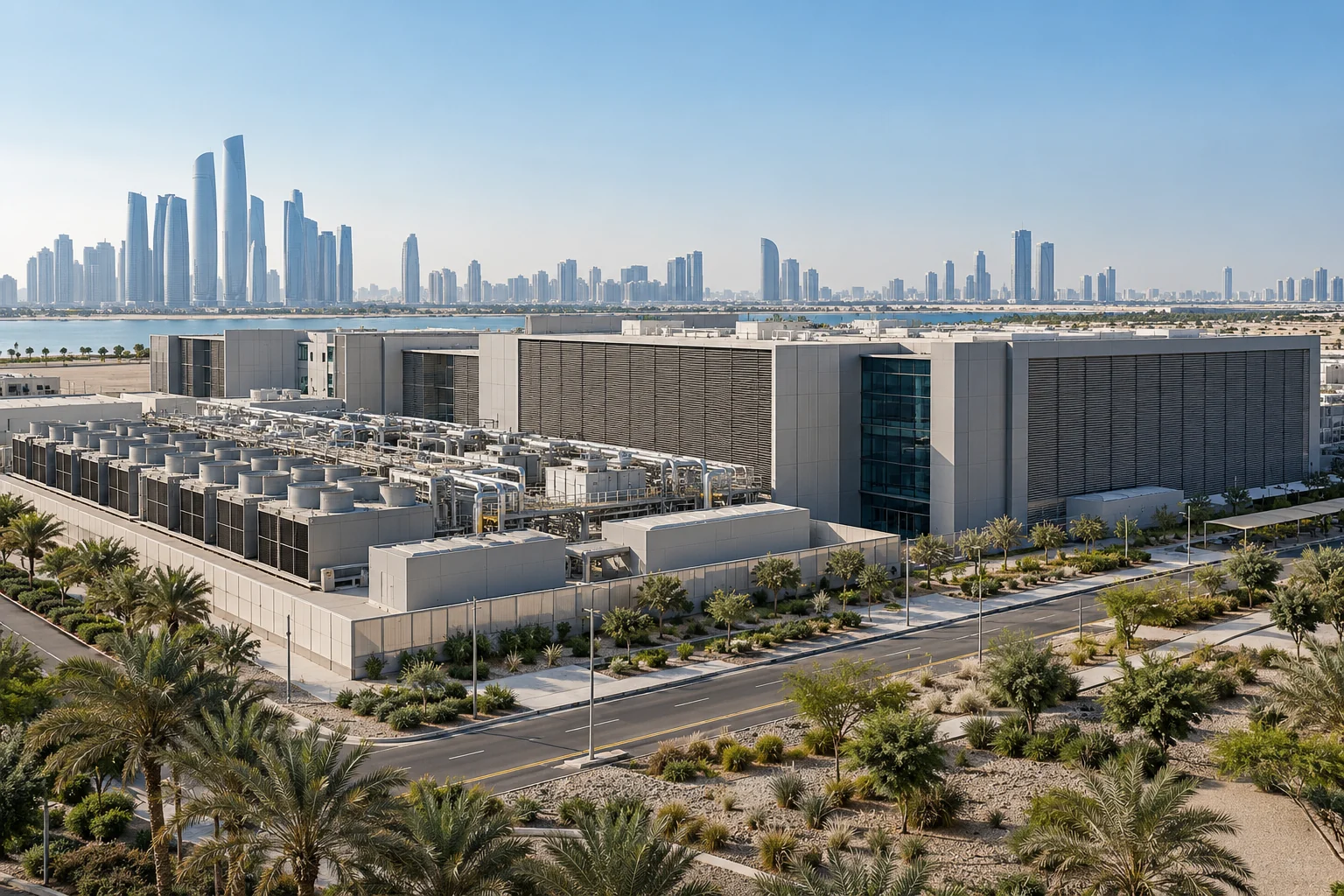
Mubadala and Together AI announced a partnership to explore AI infrastructure and ecosystem opportunities in the UAE. Together AI said it will establish a presence in Abu Dhabi. The announcement follows Mubadala’s $100 million participation in the company’s Series C, but it provides no new project budget, data-centre capacity or deployment timetable.
That distinction matters for Gulf businesses. A local office can improve access to technical and commercial teams, while sovereign infrastructure claims require evidence about where workloads run, how data is governed and which services are available locally. The release concerns a UAE investor and a U.S. company; it is not an Israel–UAE agreement.

Crypto: the SEC opened a proposal, not a final regime
On 1 October, the SEC proposed a tailored custody framework for registered investment advisers and regulated funds. It would permit self-custody in certain circumstances and the use of state trust companies as custodians. The comment period is planned for 60 days after Federal Register publication. Because this is a proposal, companies should not present it as a rule already in force.
Separately, Bitget’s official incident page said BTC and ETH withdrawals had resumed and listed further phased recovery after its 24 September wallet incident. Those statements remain the exchange’s account; the page is not an independent forensic audit. No Bitcoin price forecast or trading recommendation follows from either development.
No verified Saudi accession to the Abraham Accords or new Israel–Saudi normalization agreement was found in this scan. The absence of a verified agreement is itself a reason to avoid turning meetings or commentary into a diplomatic milestone.
Sources
- www.calcalistech.com · 2026-10-01
- www.groundcover.com · 2026-09-24
- www.mubadala.com · 2026-09-29
- www.sec.gov · 2026-10-01
- www.bitget.com · 2026-09-30