
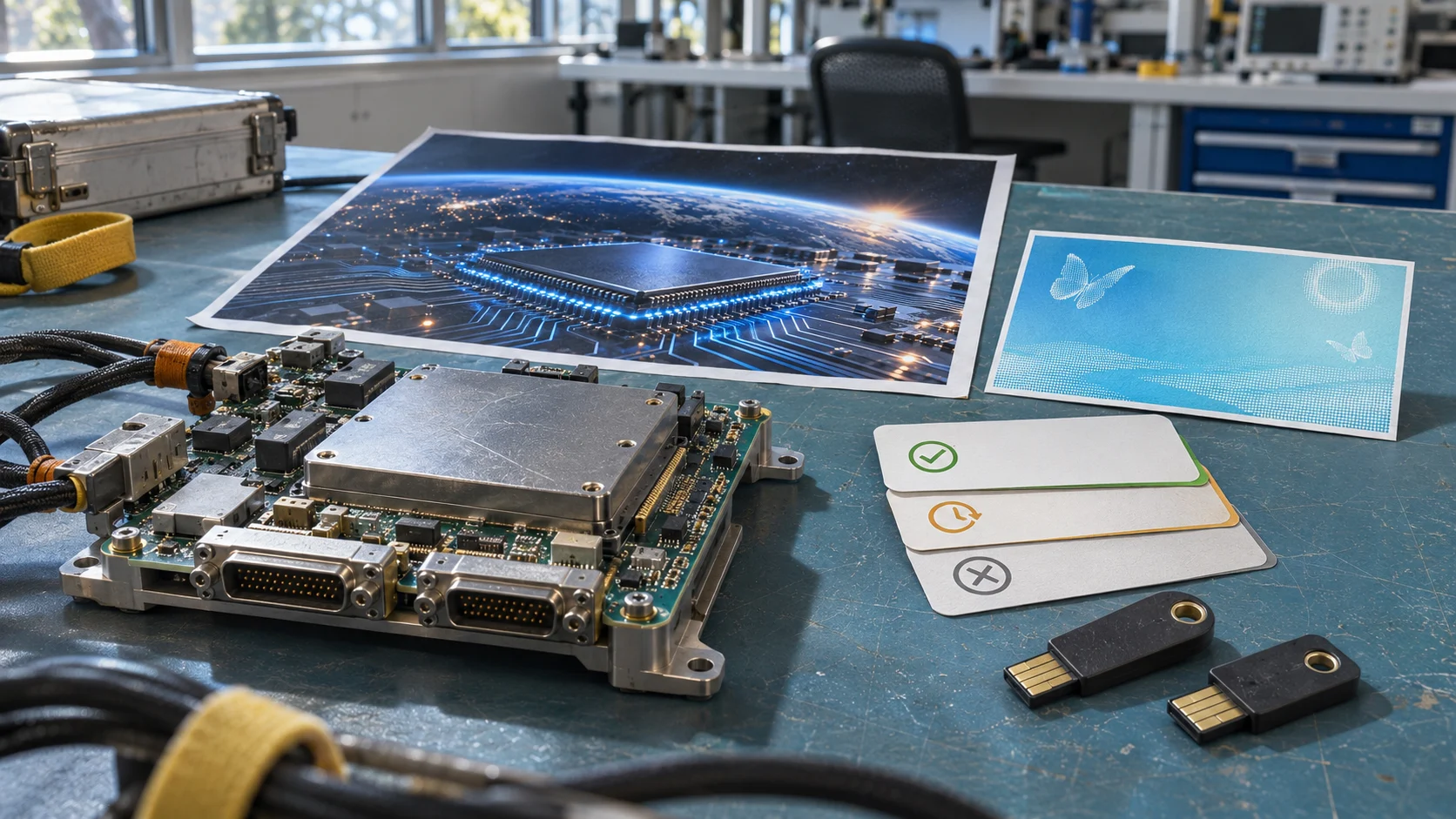
Two Israeli-founded companies put capital behind infrastructure rather than another broad artificial-intelligence promise this week. Ramon.Space raised $124 million to scale computers that process data aboard satellites, while Vero Security raised $11 million to enforce enterprise policy across the AI tools and agents employees use.
The products work in very different environments, but the operating question is similar: can computing continue safely when the system is far from direct human control? In orbit, hardware must withstand radiation, temperature extremes and limited power. Inside an enterprise, an AI agent may have legitimate access yet still attempt an action that requires approval or must be blocked.
Ramon.Space raises $124 million for computing in orbit
Ramon.Space announced the Series B on 17 November. PSG led the round, with new participation from Micron Technology, Senvest and Phoenix Financial and continued participation from StageOne, Deep Insight and Grove Ventures. The company says the financing will expand production, accelerate delivery of next-generation systems and support entry into additional markets.
The company builds onboard computing infrastructure for satellites and other spacecraft. Its systems are designed to process, store and move data in orbit, reducing the need to send every raw dataset to Earth before it can be analysed. That capability is relevant to communications constellations, Earth observation, autonomous missions and future orbital data centres.
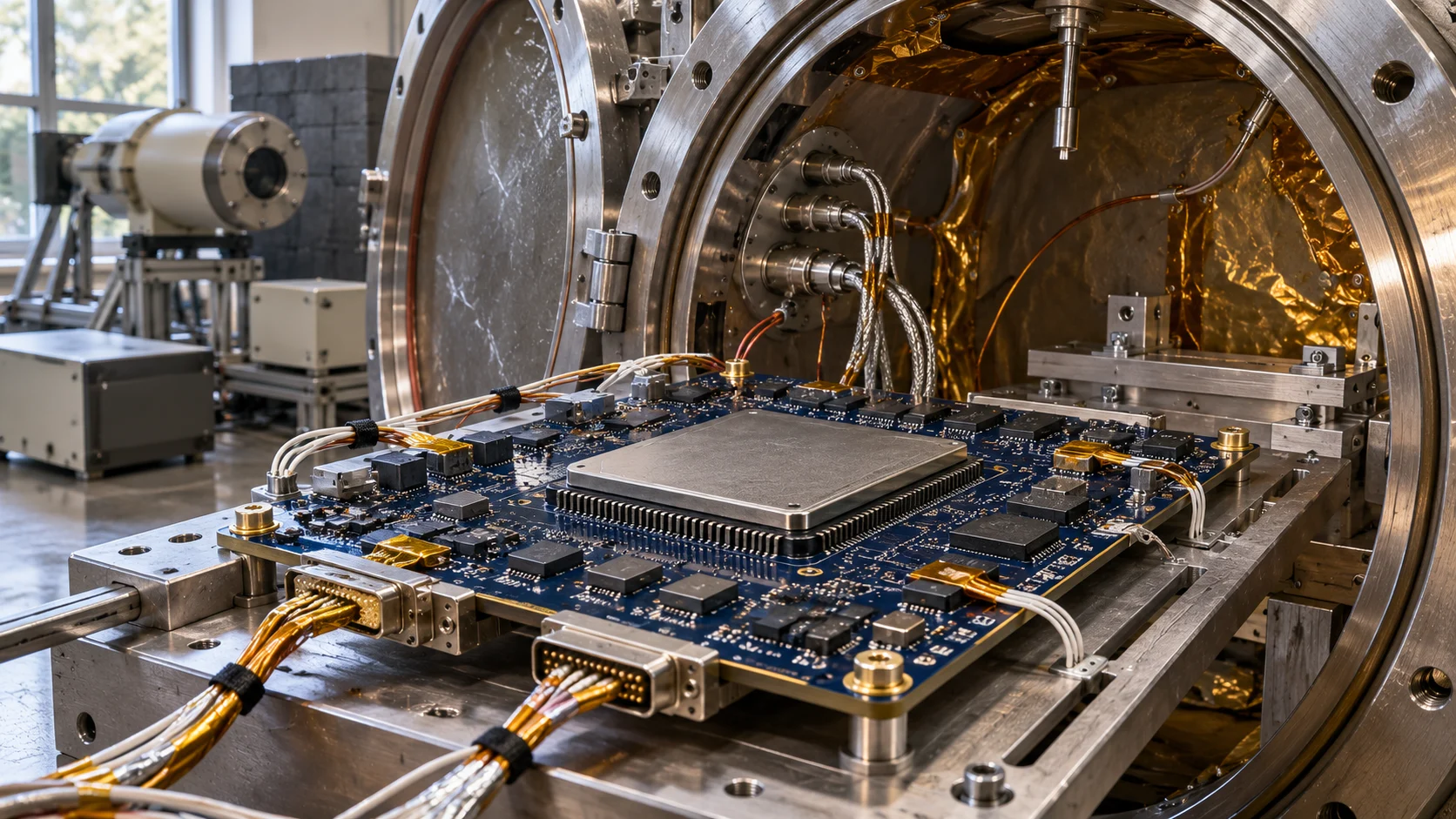
The technical constraint is physical. Electronics in space must operate through radiation, severe thermal cycles and strict power budgets, and a technician cannot simply replace a failed component. Ramon.Space says its systems already have a track record in orbit and that the new capital will help it move from specialised deployments toward much larger production volumes. Those deployment and demand statements come from the company; the announcement does not identify customers, signed backlog, unit economics or a production timetable.
The round is therefore evidence of financing and an intention to scale, not proof that millions of computing nodes have been delivered. The next useful evidence will be production milestones, named missions, launch schedules and performance disclosed by operators or independent programme partners.
Vero raises $11 million to enforce policy across AI tools and agents
Vero Security announced its seed round on 18 November. TLV Partners led the financing, with GTM Capital, Maple Capital and angel investors participating. Founded in 2025, the company operates from Tel Aviv and New York and says several Fortune 500 companies already use its platform.
Vero's product is aimed at the work that follows discovery. Security teams define what an AI tool or agent may access and which actions are permitted; the platform translates those rules into controls, updates them as vendors change their products and escalates decisions that require a person. The company describes controls that can allow an action, require approval or prevent it at runtime.
That distinction matters because an inventory or alert does not itself stop an agent from changing a production database, exposing sensitive information or calling an unapproved tool. A useful control layer must connect identity, permissions, context and an audit trail at the moment an action is attempted.

Vero also launched AISecurityEngineering.org as an open professional community. The company says the funding will expand coverage of enterprise AI technologies and security workflows and strengthen US commercial operations. It has not published independent effectiveness tests, customer names, revenue or the technical architecture behind its enforcement claims.
What the two rounds say about infrastructure
Ramon.Space and Vero are not direct peers, but both are selling control under difficult operating conditions. One places processing closer to where orbital data is created; the other places policy checks closer to where an AI agent attempts an action. In both cases, the value depends less on a demo than on reliability, failure handling and evidence that the system behaves as intended over time.
For Ramon.Space, watch production capacity, mission deployments and independently verified in-orbit performance. For Vero, watch the breadth of supported AI systems, approval latency, exception handling and the quality of audit evidence. Funding gives both companies resources to pursue those tests; it does not settle them.
Sources
- Ramon.Space funding announcement, 17 November 2026
- Israel Space Agency explainer, 18 November 2026
- CTech report on Ramon.Space, 17 November 2026
- Vero funding announcement, 18 November 2026
- CTech report on Vero, 18 November 2026
Explore more startup funding coverage and technology reporting.