
Intel has signed a definitive agreement to acquire Israeli quantum-software company Classiq. The transaction has not closed, the purchase price was not disclosed, and completion is expected in the first half of 2027 subject to regulatory approvals and customary conditions.
The proposed combination would connect Classiq's high-level quantum-software platform with Intel's silicon spin-qubit research, semiconductor manufacturing expertise and existing software. This is a strategic plan for a fuller development stack, not evidence that commercial quantum computing is already available.
What Classiq contributes
Classiq gives developers a higher-level way to specify a quantum problem. Its Qmod language and assisted interfaces describe the intended behaviour and constraints, while the platform generates and optimises circuits for different hardware environments. The aim is to reduce the amount of manual gate-level work required from developers.
That abstraction layer matters because quantum hardware remains fragmented. Different processors expose different gate sets, connectivity limits and error profiles. Software that can translate an algorithmic objective into hardware-aware circuits may help research teams compare options without rebuilding every experiment from scratch.
Intel says it intends to preserve Classiq's existing multi-platform integrations and hardware-agnostic approach after closing. That commitment matters to customers because Classiq's present value includes its ability to work across multiple quantum systems rather than only one processor family.

Why Intel wants the software layer
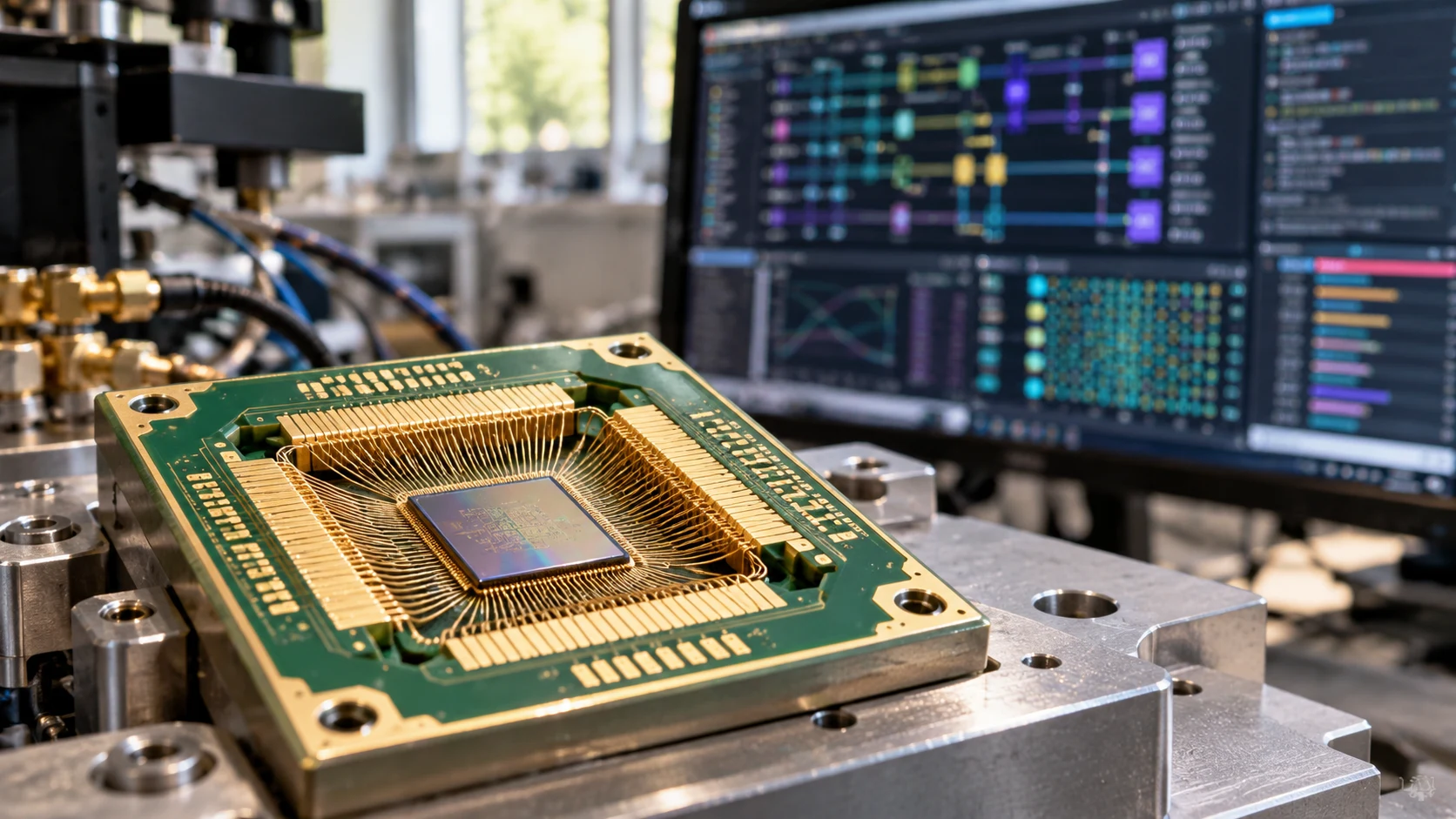
Intel's quantum research focuses on silicon spin qubits, including its Tunnel Falls research chip. The company argues that manufacturing qubits with processes related to conventional semiconductor production could eventually support scale. That remains a research proposition: useful fault-tolerant systems still require major advances in device quality, control, error correction and system integration.
Acquiring Classiq would give Intel a developer layer while those hardware challenges are being addressed. It could also help Intel work with universities, laboratories and corporate research teams before its own quantum processors reach commercial maturity. Software relationships can reveal which algorithms, resource estimates and workflow integrations matter to users.
The strategic logic resembles other computing platforms: hardware becomes more useful when developers have tools that hide some of its complexity. But quantum software cannot remove the physical limits of current machines. Better circuit synthesis may reduce resource requirements; it cannot turn an experimental processor into a fault-tolerant production system.
What the deal means for Israel
Classiq was founded in Tel Aviv and has become one of Israel's most visible quantum-software companies. The agreement gives Intel a locally developed software platform and specialist team while placing Classiq inside a much larger semiconductor and computing organisation.
For the Israeli ecosystem, the deal demonstrates demand for enabling layers around emerging hardware. The value is not based on a mass consumer market today. It rests on intellectual property, specialised engineering and the possibility that a development platform becomes embedded in research and enterprise workflows before quantum computing reaches broad commercial use.
What remains unresolved
Intel and Classiq have not disclosed the purchase price or detailed integration plan. They have not said whether Classiq will continue as a separate brand, how the team will be organised, or when customers will see combined products. Until closing, the companies will continue to operate independently.
The confirmed development is therefore narrower than the most ambitious interpretation: Intel has agreed to acquire Classiq and plans to combine its software with Intel's quantum and classical computing work. It is a strategic bet on a full-stack platform, not proof that the sector has solved the timetable to practical quantum advantage.
Sources
- Intel acquisition announcement, 26 October 2026
- Classiq official platform
- Intel Tunnel Falls research-chip material
Explore the Classiq company profile and more funding and acquisition coverage.