

This article was first published on 5 November 2020. The edition below was corrected on 10 October 2026: company descriptions and sources were checked, unsupported medical promises were removed, and subsequent developments are identified separately. These are different technologies with different intended uses; they are not a collection of COVID-19 cures.
IceCure: cryoablation
ProSense uses a probe and very low temperatures to destroy targeted tissue. Patient selection and permitted indications depend on the device label and country. The FDA review for a defined breast-cancer use identifies risks including incomplete ablation, recurrence and tissue injury. It would be inaccurate to promise that surrounding tissue always remains intact or that additional treatment is never needed.

Parasight: automated malaria analysis
Parasight was a Sight Diagnostics platform for detecting malaria parasites in blood samples using automated imaging. A published clinical study compared it with laboratory diagnostic methods at sites in India and Kenya. That historical research does not establish current commercial availability, performance in every setting, or permission to use the device in a particular country.

Ibex: AI in digital pathology
Ibex develops software that analyses digitised tissue slides to support pathology workflows. The relevant questions are which tissue, diagnostic task and software version are covered, how the tool fits into the laboratory, and how a pathologist reviews its output. A company-level description is not evidence that every product has the same regulatory status or diagnostic performance.

Zebra Medical Vision: the later Nanox.AI business
The original article described Zebra's medical-image analysis work. In a later development announced on 8 November 2021, Nanox reported completion of the merger and said Zebra was operating as Nanox.AI. Regulatory clearance concerns a specified device and intended use, rather than blanket approval of a company or all of its algorithms.
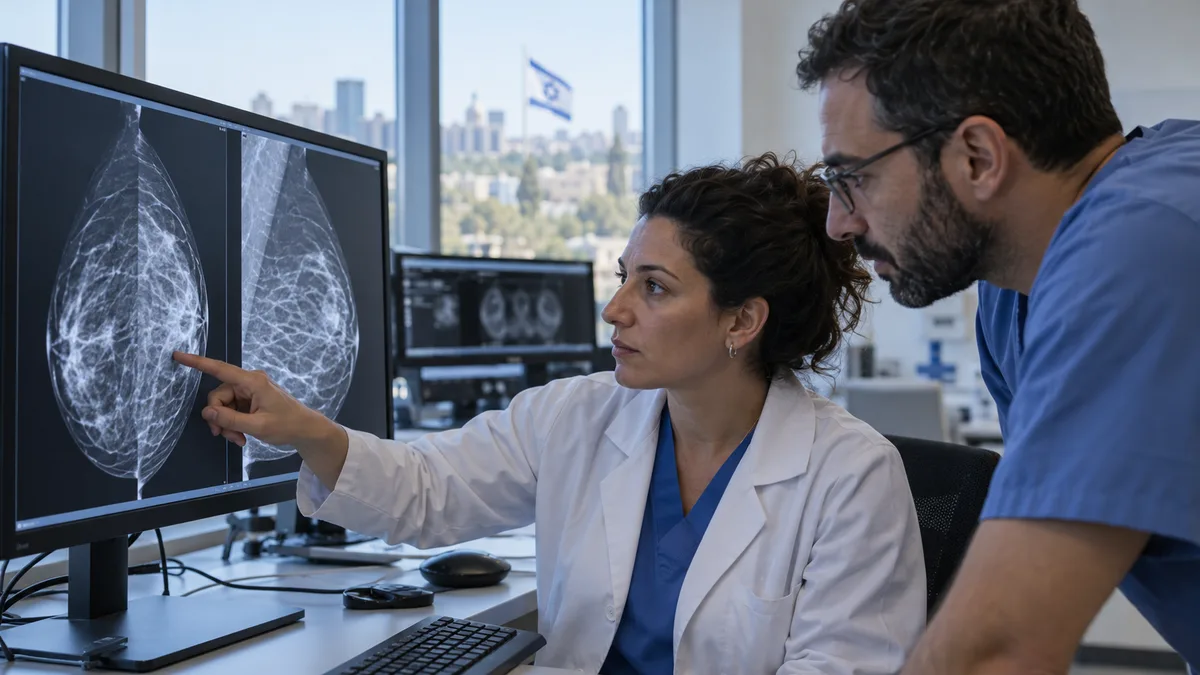
RealView: medical 3D visualisation
RealView describes HOLOSCOPE-i as a medical holography system for visualising volumetric imaging data. The earlier article misspelled the product name as HOROSCOPE-i. Visualisation is a tool for interpreting anatomy; it does not, by itself, demonstrate a better clinical outcome. The illustration here uses a teaching model and ordinary display, not a replica or photograph of RealView's device.
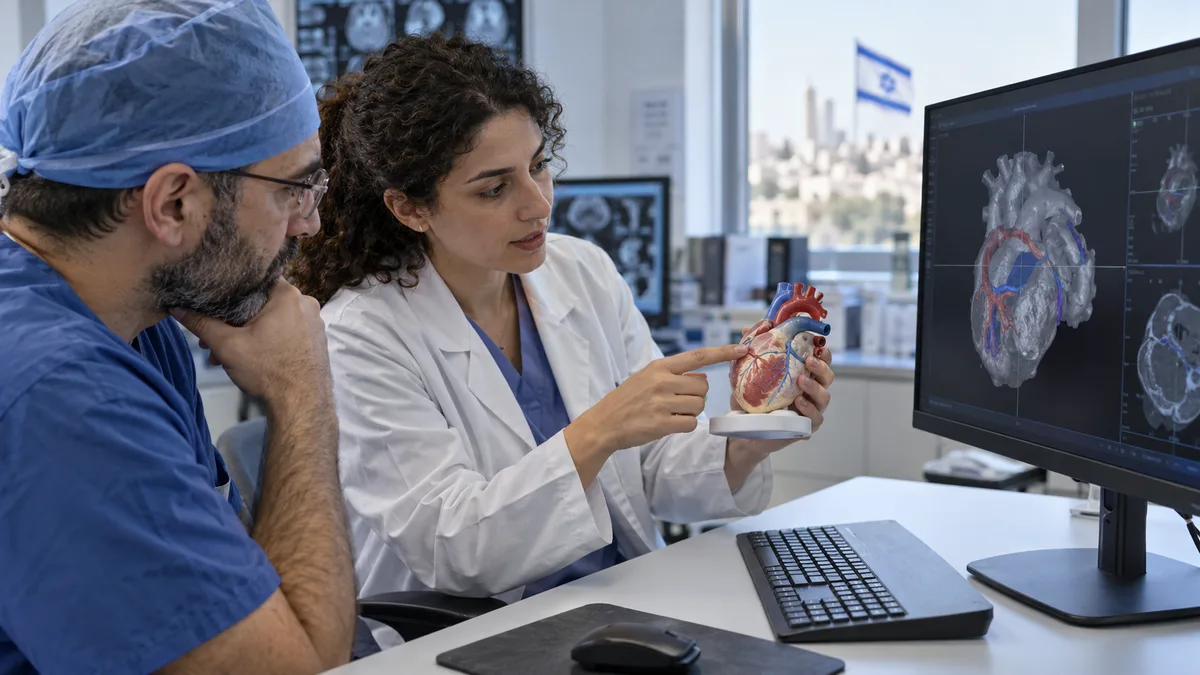
MeMed: interpreting the host immune response
MeMed BV combines measurements of host immune-response proteins into a score that helps clinicians distinguish bacterial from viral infection. Its stated use combines the result with clinical assessment and other laboratory findings. It is not a direct identification of the pathogen, and a result should not be treated as a standalone instruction to prescribe or withhold antibiotics.
CorNeat: artificial-cornea research
CorNeat KPro is a synthetic cornea intended for corneal replacement without donor tissue. At this review, the company's product page explicitly identifies it as investigational, not approved for commercial sale, with safety and effectiveness being evaluated in clinical trials. An individual implantation story is not evidence of suitability for every patient or general availability.

TytoCare: remote physical examination
TytoCare connects examination tools and remote clinician workflows, including collection of heart, lung, ear and throat information. This is more than an ordinary video call, but it does not mean every condition can be assessed safely at home. Availability, clinician coverage, examination quality and escalation to in-person care must be checked for the relevant service.

NovaSight: eye tracking and vision care
NovaSight develops eye-tracking tools for children's vision care. Its website distinguishes CureSight amblyopia treatment from TrackSight vision monitoring and myopia-related development; these are not interchangeable products. Assessment or treatment needs the appropriate device, intended use and professional supervision. Our illustration shows a fictional research session, not a CureSight treatment setup.

Theranica: remote electrical neuromodulation
Theranica's Nerivio is a prescription neuromodulation device for migraine. Its use is subject to age, indication, safety instructions and contraindications in the applicable label. The manufacturer identifies restrictions including uncontrolled epilepsy and active implanted electronic devices. A treatment option does not guarantee relief, and the fictional consultation image does not show the product or a treatment result.

What to check before adoption
For a hospital or distributor evaluating a project, request the exact intended use, local authorisation, evidence for the proposed patient population, training requirements and integration plan. Product pages explain the supplier's position; clinical and regulatory documents are needed to assess the specific claim. The sources above were checked for this editorial correction, not as medical advice or an endorsement.